

How to Choose a Commercial Espresso Machine
Commercial espresso machines can be costly, and a good one requires routine maintenance and service by a qualified technician. These machines can also require reworking the cafe's plumbing to meet water requirements.
Commercial espresso machines have multiple brewing groups and can serve many customers simultaneously. This allows for more consistency and a wider variety of drinks.
It's a wise investment
It is important to evaluate your options prior to deciding on an investment in a commercial espresso machine. There are a myriad of factors to consider, such as size and capacity along with maintenance costs and design. It is also essential to choose a machine which is inspected and meets health and safety standards. Look for UL listings or NSF seals, for instance, to ensure your machine is safe to use in a cafe.
The size of your company and the number of customers you serve will determine the type of commercial coffee machine you need. If you operate small-sized cafe with a low volume, you might prefer an espresso maker that is manual and has only one grouphead. However, if you're a bigger cafe with high demand it may be necessary to buy an additional grouphead, or a triple machine.
The size of your kitchen is another aspect. You'll need to find the space that's big enough to accommodate your commercial espresso machine, but not so large that you are unable to access it easily. You'll also need to keep the machine clean and well-maintained. This will prevent clogs and build-ups, which could be costly to fix. You'll also require a water purification system to remove sediment and chlorine.
Commercial espresso machines can be costly to repair or replace, so it's a good idea to choose a reputable vendor that offers warranties on their products. Find out how long they've been operating. Usually an extended warranty will be more affordable in the long in the long.
Unlike home coffee machines, commercial machines are designed for heavy use and typically cost more than the home versions. They also require more frequent maintenance. This includes regular replacements of filters and cleaning to remove any minerals. You should also think about an industrial water filtration system to protect your machine from sand and chlorine.
Commercial coffee machines can also vary in their ability to handle different types of drinks. For example, some offer a wide range of beverages, while others have limited options. Additionally, some come with special features such as integrated grinders and automated milk frothers. These features can be the difference between a cup coffee that is excellent and one that does not satisfy your expectations.
It's an absolute must
The right commercial espresso machines can make or break the quality and profitability of a coffee shop. It's important, as with any major purchase, to choose the best option for your company and budget. Start by determining the size of your business and how many drinks you will serve every day. This will help you determine the amount of power and space you'll require for your espresso machine. Look for a machine with reliability and durability. A knowledgeable consultant can assist you in finding the ideal espresso machine for your business.
The steam wands and the hot water dispenser are the most essential elements of a commercial coffee machine. These components are made to produce a large volume of drinks, so they need to be constructed from robust safe food-grade materials. The best choice is stainless steel. option, as it won't cause rust or leaching of chemicals in your coffee.
Be aware of the barista's level of competence when choosing the best commercial espresso machine. Consider a superautomatic machine in case your staff has no experience. It will make it easier for them to manage the brewing process. These machines are typically on the more expensive side of the spectrum, but they can be customised with features like a built-in refrigerator for milk and various levels of menu control. A manual or spring piston machine might be better for baristas who are experienced and prefer an approach that is hands-on.
You must also be aware of the potential growth of your business. The ideal espresso machine will be capable of handling the anticipated volume of sales at the peak hours. If you anticipate serving 120 drinks between 8 and 10 am during the morning rush, you will require a semi-automatic espresso machine that can handle this volume.
Lastly, consider the energy efficiency of your espresso machine. A good espresso machine will be energy efficient enough to help you save money on your energy bills. Choose an energy-efficient machine with stainless-steel boilers and heat recovery technologies, or invest in an approved Energy Star espresso machine. This will ensure your coffee shop is in compliance with environmental regulations.
It's a feature
If you're planning to make coffee in your commercial space, you need to have the appropriate equipment. A high-quality espresso machine can set the tone for your business and help you attract customers. This is particularly important for coffee shops, as the specifications are frequently used to hire baristas.
The capacity of the espresso machines in your commercial establishment is among the most important aspects to consider. You need to know how many drinks your machine can produce per hour to determine the proper size and kind. If you're not sure about your requirements, you might consider hiring an expert who can help you determine how many drinks you'll require per hour.
If you're looking to purchase an espresso maker for commercial use, you must take into account the amount of steam it can produce. A top-end machine will typically produce more steam than a cheaper model, so it is worth investing in if you can afford it.
A good espresso machine also has a water filtering system. This is important, as it eliminates mineral deposits that can block internal plumbing. It's similar to cleaning the plumbing in your car. It will ensure that your commercial coffee machine lasts for many years.
In the final phase, you have to decide on how your espresso machine will be connected to the plumbing of the building. Generally speaking, you should have a sanitizer (like bleach) hooked up to the drain in order to protect against bacterial and other debris. It is a good idea to also have a floor drainage system in the vicinity, since many local zoning boards require it for commercial establishments.
In addition, you must be aware that your commercial espresso machine must be certified for food service. While this varies slightly from place to place however, the majority of states will have specific certifications you'll need to meet to run an establishment or cafe. If you do not have the proper certifications you could be penalized or your business could be shut down.
It's not a style.
The commercial espresso machine is an example of the combination of art and science. It is a cornerstone for cafes, and a symbol of coffee people. Its development is a fascinating story of technological advancement as well as the culture surrounding it.
Commercial espresso machines are constructed out of stainless steel or FDA-approved materials that are able to release chemicals into your coffee. They are also UL-listed and constructed with NSF Seals, which assures that they meet the standards established by health departments. This is crucial because many cities and state require that any coffee-related appliance or equipment be UL certified and made of NSF certified materials.
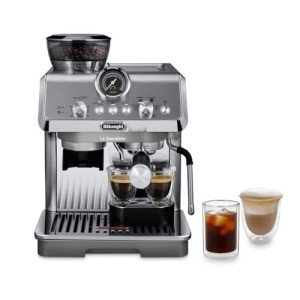
There are many different types of espresso machines available, and each one has distinct advantages and features. For instance, super-automatic machines can grind dose, tamp, and extract espresso shots with the touch of a button. They can also be equipped with a frother that can make lattes and cappuccinos. A traditional lever espresso machine is another option. This requires a lot of expertise and experience, but can create excellent shots.
The espresso maker you select will depend on the volume of production required by your business. You will need to decide how many drinks you are able to make per hour, whether you operate a restaurant with a high volume of customers or a study space that has little or no traffic. It is also important to take into consideration your water and electrical requirements, which may affect the longevity of your espresso machine.
stovetop espresso maker fall into one of two categories - heat exchange (HX) or dual boiler (DH). HX machines utilize the same thermoblock for heating brew and steaming water, while DH machines have separate boilers for steaming and brewing water. Dual boiler machines are more efficient for steaming, but they also provide the same brew temperature.
Check your water prior to you select a machine. It should be free of sediment, low pH and excess chloride. Filtration systems will eliminate these contaminants and extend the life of your espresso machine. This will also improve the taste of your coffee.